If a Startup understands customer intent, they'll go far

Updated: Oct 5
Your customers are lying to you.
They don't even know they're doing it.
They ask for a feature. What they mean is "make my pain go away." They ask for a discount. What they mean is "I don't feel like this is worth it." They ask for a policy change. What they mean is "something in this experience broke my trust."
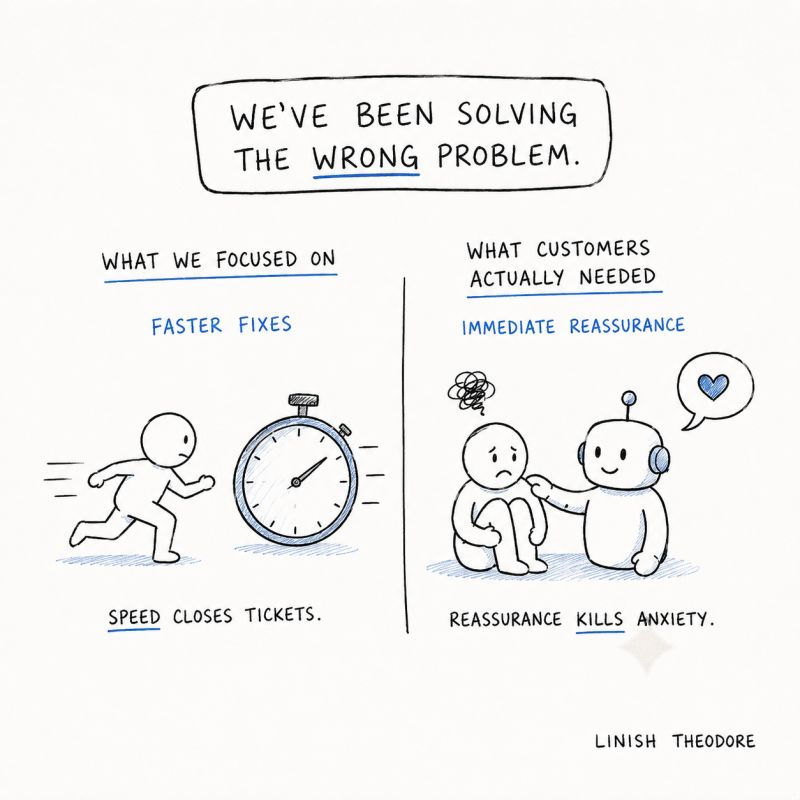
Most companies fulfill the request. The best companies decode the intent underneath it. The average businesses and great ones split by their ability to decode customer intent.
The key to remember here is: Customer-centricity isn't a "yes" machine.
Saying yes to every request feels like you care for your customers.
It's actually the opposite. It's outsourcing your product strategy to whoever complained the loudest.
Real customer-centricity means sitting with the request (despite all the discomfort) long enough to find the customer's need hiding behind it.
Say a customer asks for a discount for something you don’t offer a discount.
The transactional response is to escalate it to a manager, or hold the line and say no.
Either way, you've answered the request and missed the customer.
The diagnostic response would be: You ask why now, what changed, what they were expecting to get out of this and often what comes back isn't about money at all, it's that a promised was not met, and the discount is just the only language they had to say "I don't trust you anymore."
Give them 25% off, and you've fixed nothing. The problem is still there, waiting for the next customer who won't even bother asking for a discount, they'll just leave.
This is what separates a transaction from a diagnosis: one customer's request is an anecdote, a preference, an edge case, easy to dismiss or easy to fulfill without thinking. But sit with enough of these conversations, and patterns show up. Hundreds of people describing the same broken trust in a hundred different ways. That's not a discount problem anymore. That's a signal.
One customer complaining, you can ignore it but a hundred saying the same thing - now you've got to look for the pattern.


Comments